Dana Kaufman
Thesis: Social Terrain
We live in a disposable age. We demolish, knock down and abandon what we build when it no longer meets the ‘aesthetic’ of the time or when we believe it has served its purpose.
The notion that discarded materials are inherently useless raises questions about our principles when we build and our expectations of them once they have outlived their use. This led Dana to her research question: What if the built environment was intentionally designed for the assembly and disassembly of components to prolong the life of materials?
Dana’s final thesis, titled “Social Terrain”, challenges conventional building and demolition techniques that typically produce excess waste, while displaying a more sustainable method of construction through the concept of assembly and disassembly.
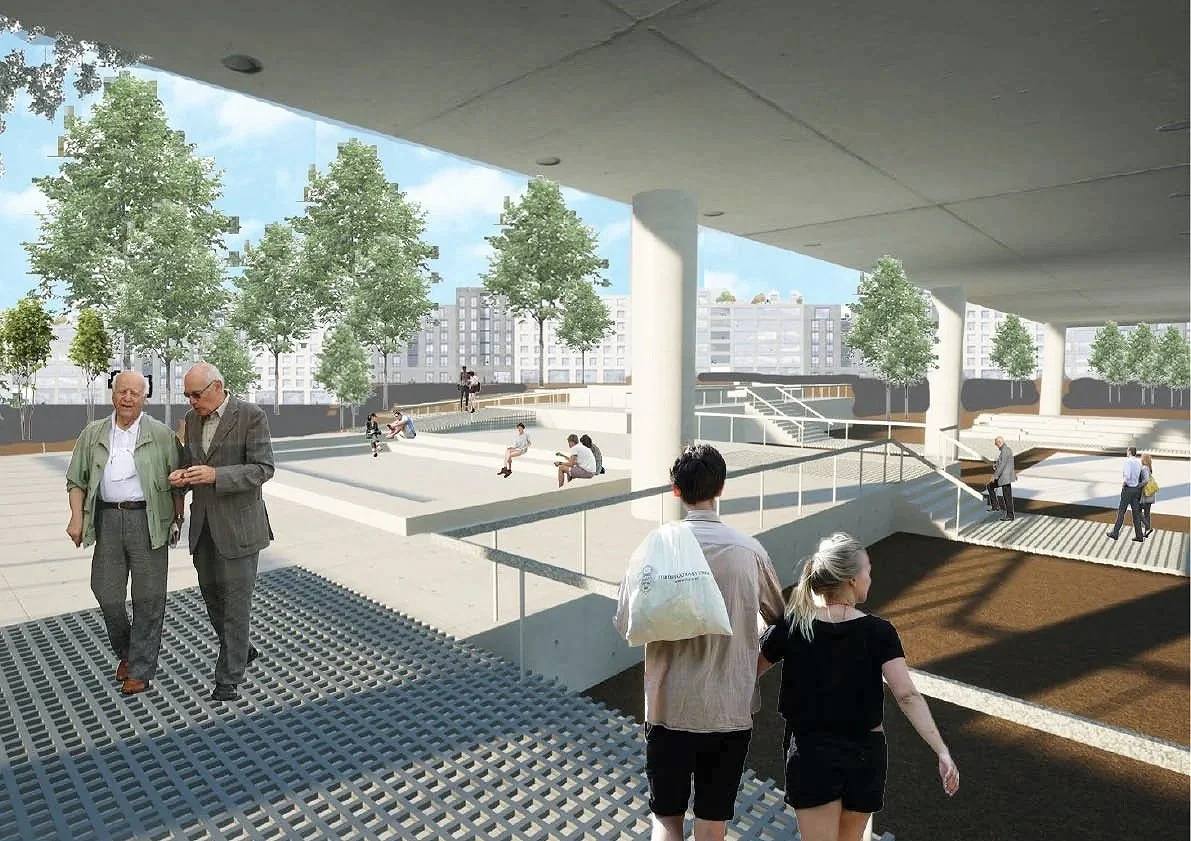
This project is an interior terrain that utilises material from the original Park Street Housing Commission and assembles the material into a multi-level, social civic terrain that lives under the newly built commission housing. This space is for residents of the newly built social housing to learn, socialise, play, relax, eat, and come together.
The Park Street Commission housing located in South Melbourne is the chosen location and is included in the renewal project. Homes Victoria will demolish and rebuild this specific site, with others, over the coming years. They aim to rebuild a modern housing commission, following the government's insistence that the buildings are "coming to the end of their operational life."
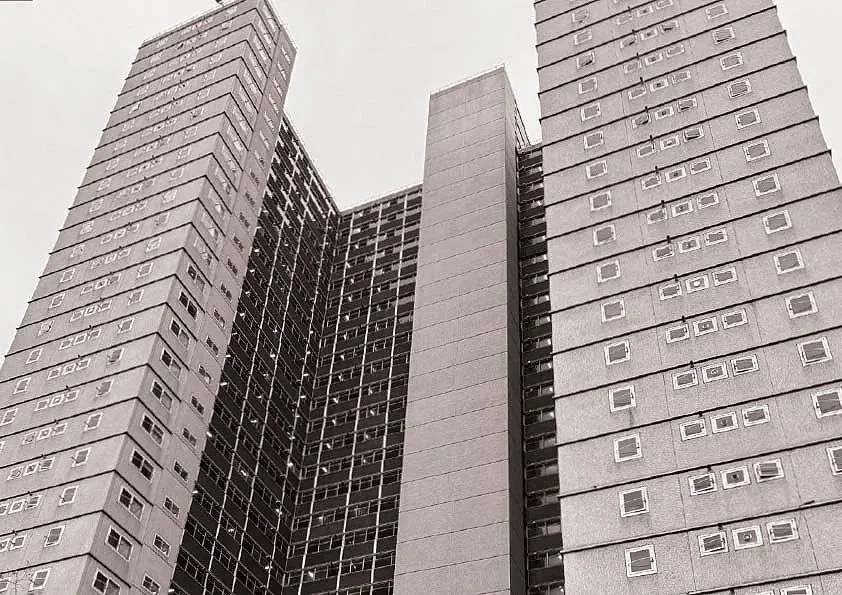
Social terrain aims to address the current environmental issues arising from the 44 large-scale social housing demolitions and the waste that will result from the renewal project.
In response to the waste the renewal project will generate, she proposes that the original building adopt the technique developed by Taisei Corporation, which slowly disassembles a building floor by floor. This method ultimately reduces carbon emissions by 85% while allowing for material to be salvaged and reused.
The social terrain lies beneath the new building, paying homage to its predecessor's modernist design. The terrain mimics modernist styles inspired by architecture such as Villa Savoye, with its geometric shapes, multilevel modular forms, and open-plan design.

This project highlights the need for the reduction of discarded material produced by the built environment. It challenges conventional building and demolition techniques while also displaying a more sustainable method of construction through the concept of assembly and disassembly, exploring themes of circularity, intentionality, design for disassembly and the revival and reclamation of waste material.
Saturday indesign: Framing conversations
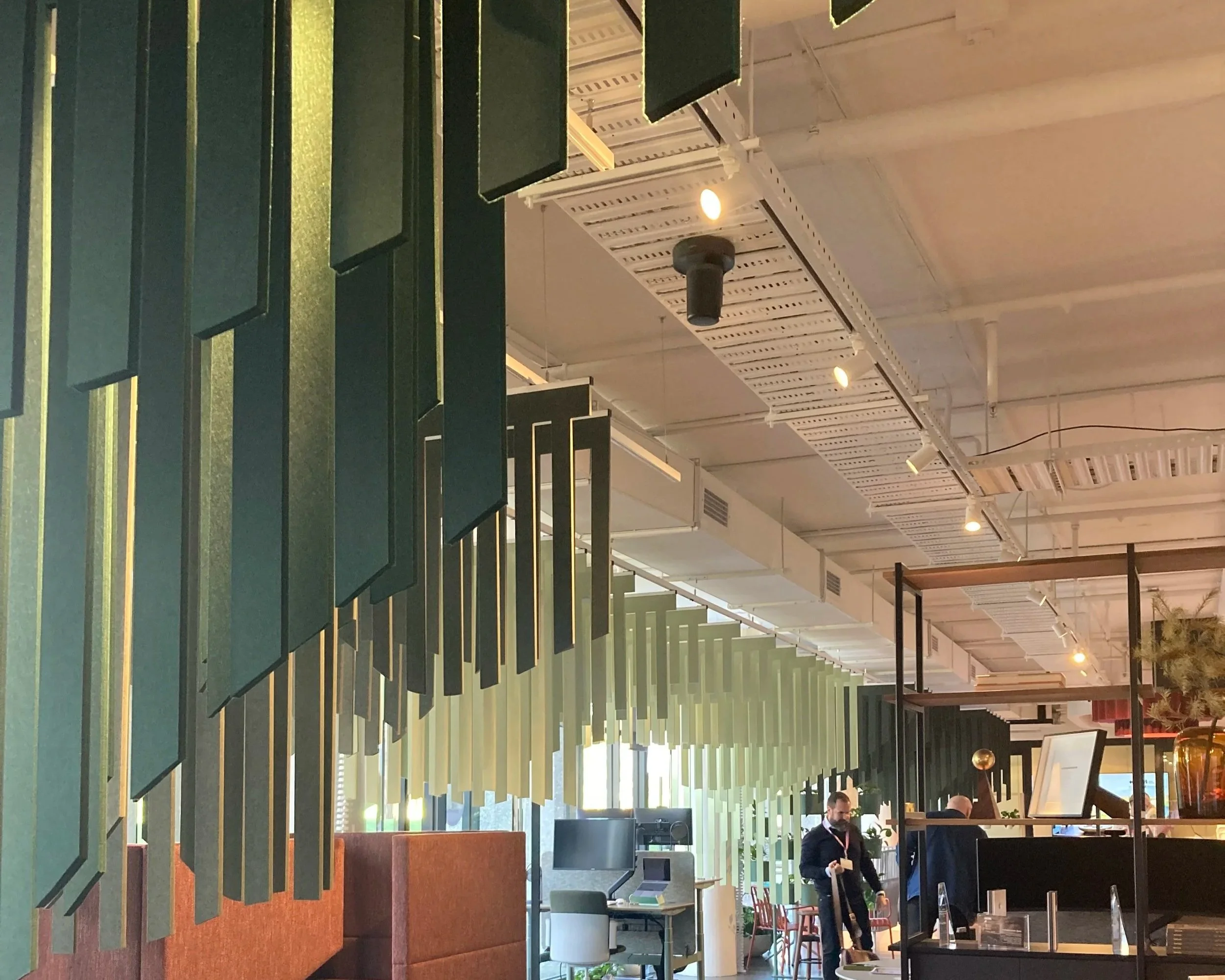
Framing Conversations” is a sensory experience and installation produced in collaboration with HOW and Autex Acoustics as part of Saturday Indesign 2023.
It was created in response to Saturday Indesign’s Utopia theme. This installation engages with Autex’s sustainable materials and the interior environment of HOW’s showroom.
The installation aims to encourage conversation through framing, revealing, and enhancing qualities experienced in the interior space, and to encourage audience participation through dialogue.