Sarah Witney
Sarah’s projects focus on programme-based design that invites conversation and dialogue through visual material reflecting an iterative, collaborative process with materials, photography, model-making, and drawing. She thrives on investigating through creating and experimenting that respond to or contribute to existing theoretical research.
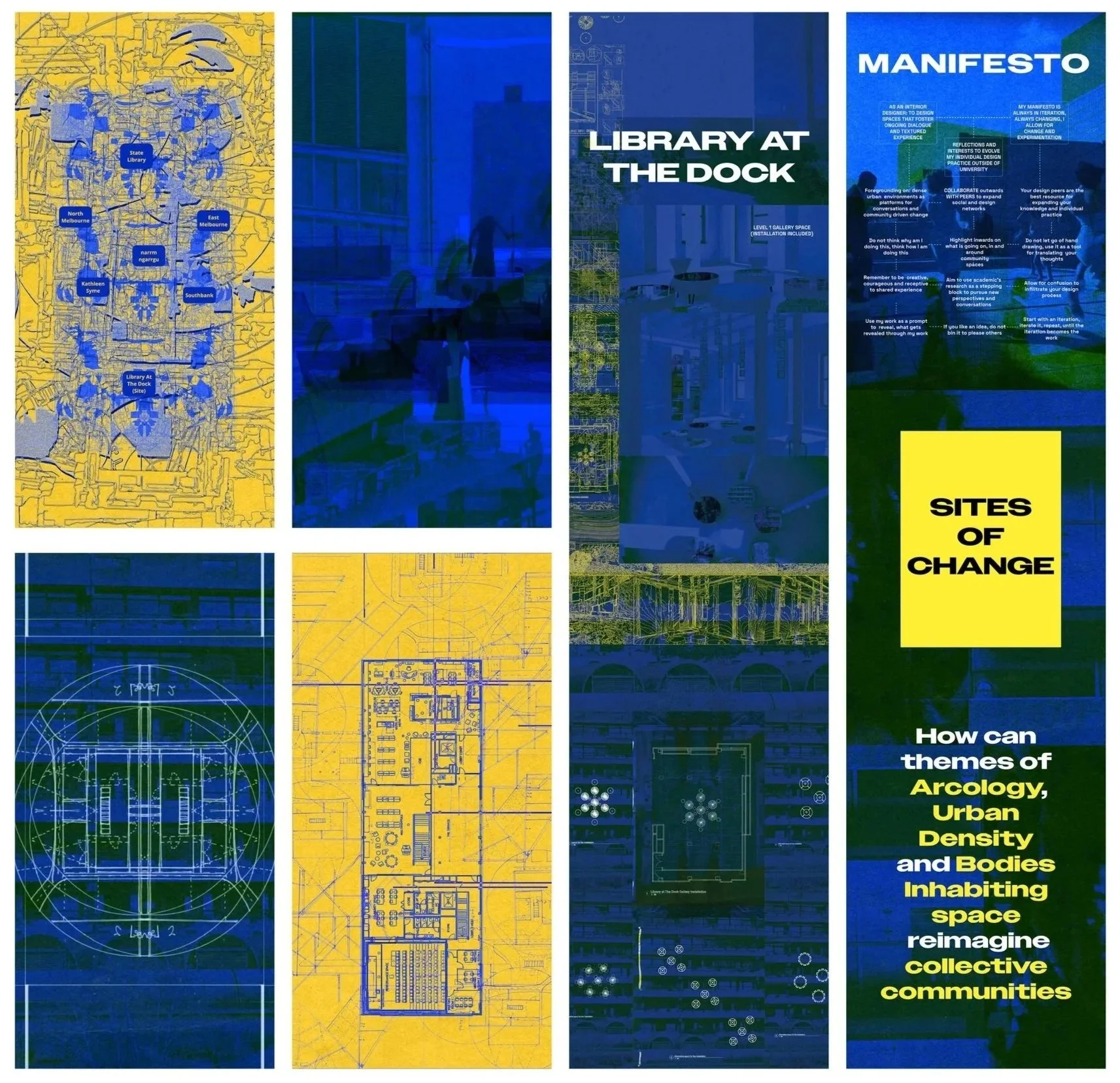
The ‘Sites of Change’ programme leverages visual materials and the setting of the Library at the Dock to explore how collective communities can be spatialised within this context. Each visual work responds to provocations centred on the core themes of Arcology, Urban Density, and Bodies Inhabiting Space, forming a perspective into how these concepts can be interwoven to reshape collective experiences. The project is not about providing direct solutions but personal interpretations and inviting dialogue.
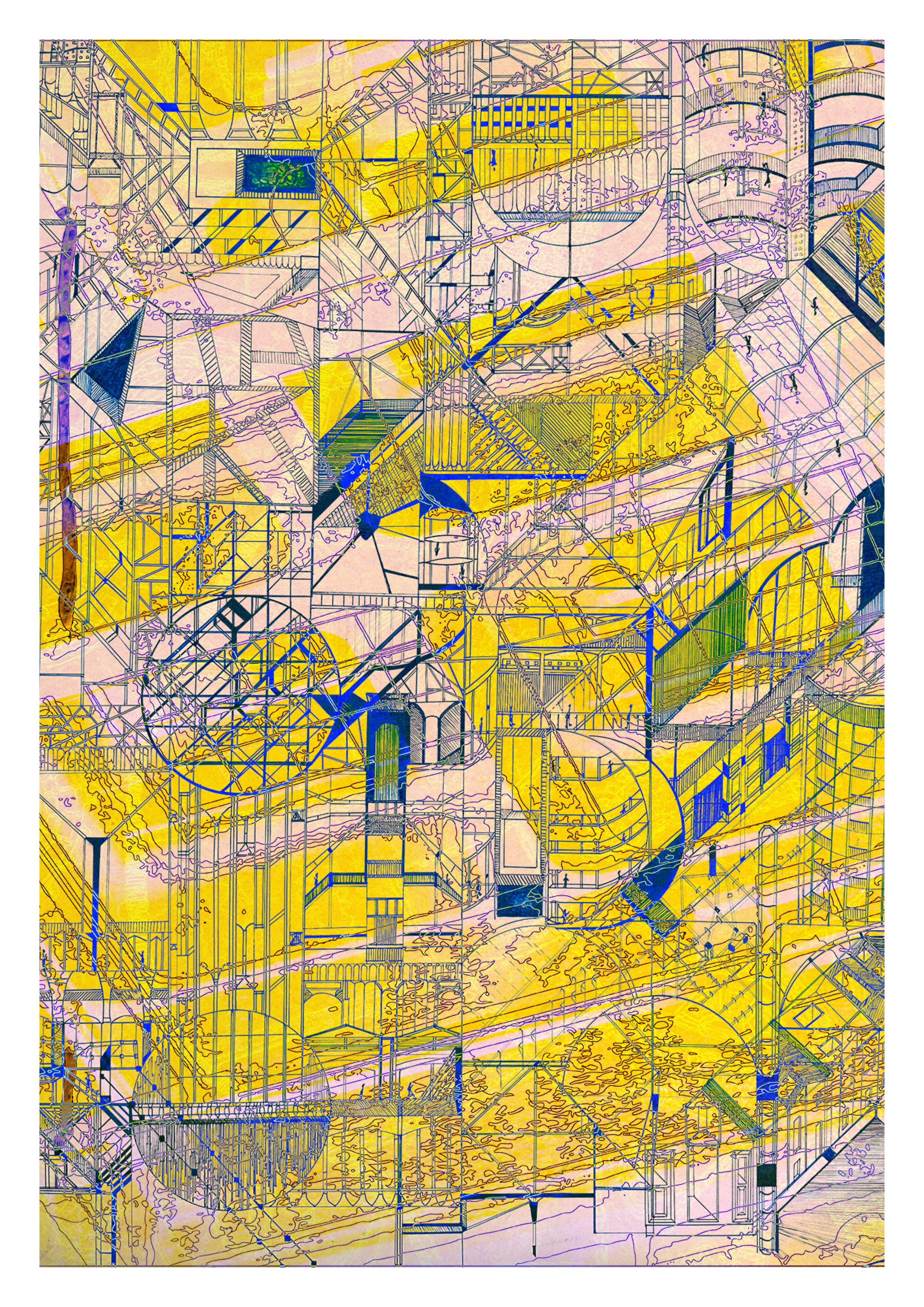
Additional work from ‘Sites of Change’ compares Cantinho do Cé in São Paulo, which represents design intervention and revival in informal settlements, and Dharavi in Mumbai, which represents an extension of formal spaces. The drawing outcome is iterative, with real-life comparisons depicted in a fictional infrastructure.
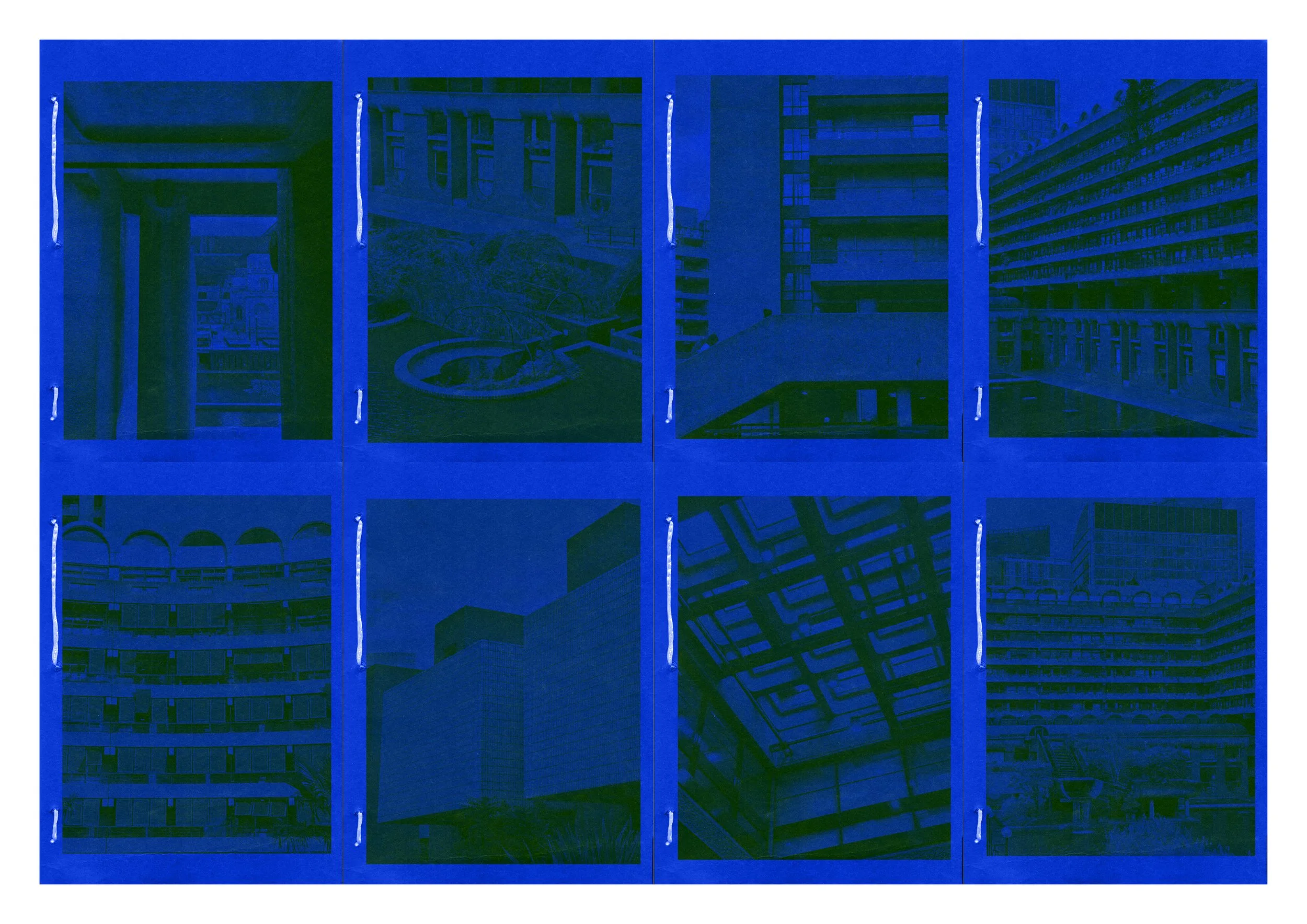
The photographic series focuses on understanding how the Barbican acts as a model for the future or as an exceptional case in uncertain times. It captures residential and cultural spaces, architectural innovation, adaptability to societal changes, and the evolution of urban planning and housing design.
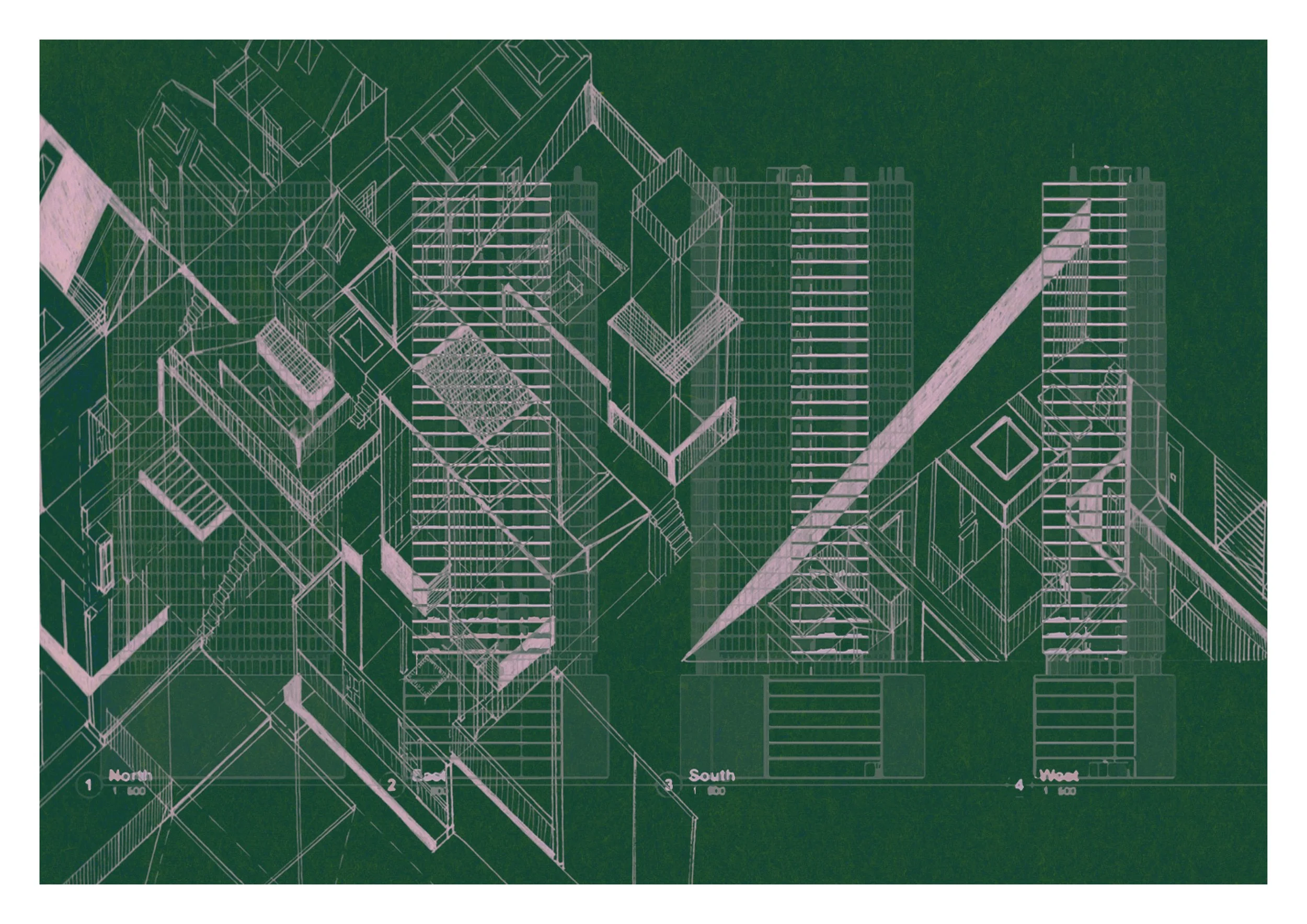
This Elysium outcome focuses on establishing a programme that utilises an existing structure to reconfigure the interior and exterior facade into a blissful oasis of the imagination. This work is a snapshot of the drawing process that collaborates with materials and concepts.
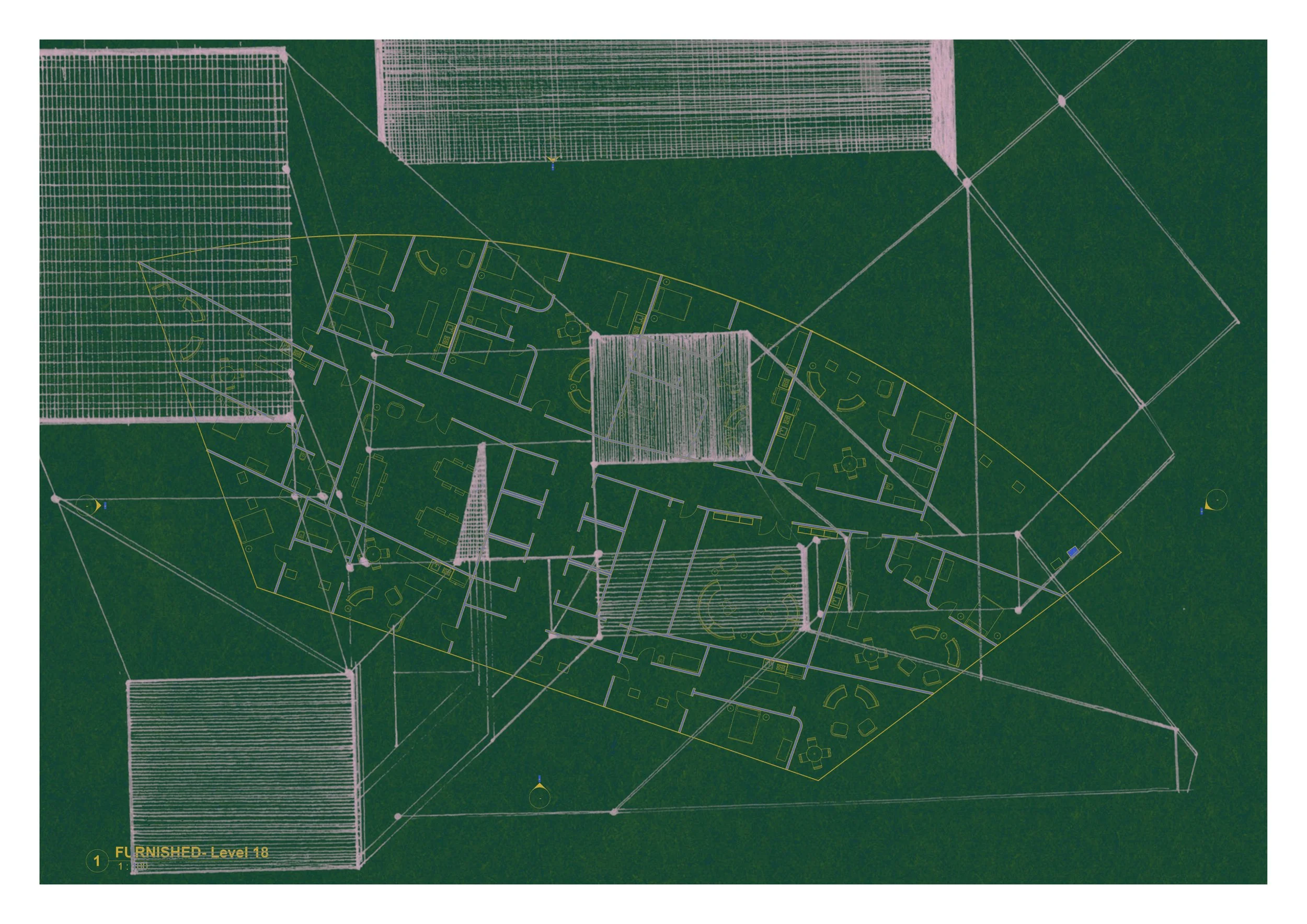
Elysium drawing collage.
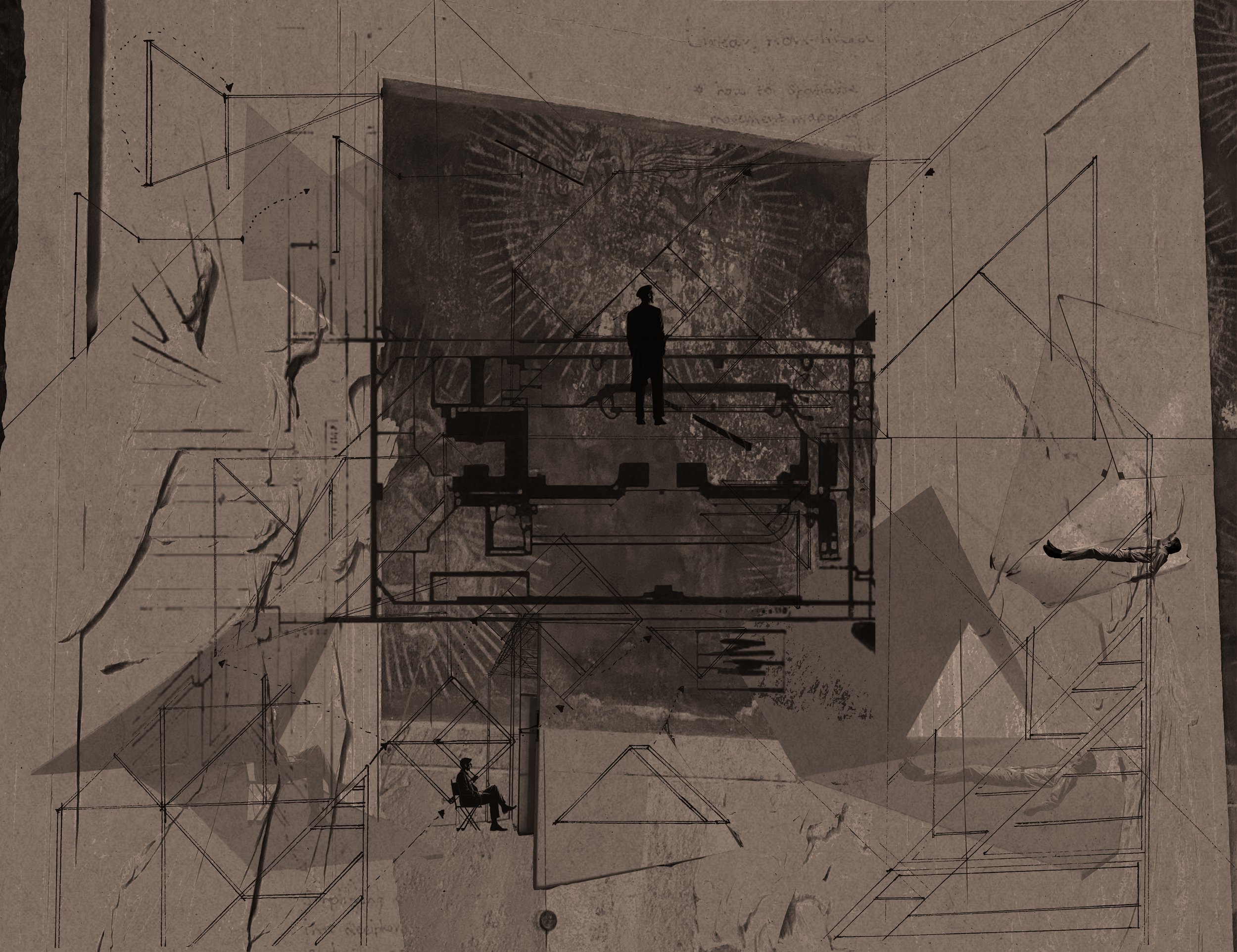
The concept of ‘Body intercepting time’ centres on the arrangement of standing, sitting, and lying down in film spaces, turning them into interactive discussion areas. This project emphasises body movement and inhabitation, where viewers converse within these spaces. Drawing inspiration from John Lennon and Yoko Ono’s Bed-In for Peace, the concept explores how the physical positions in discussions can influence the duration, formality, and type of emerging arguments.
